Qualified Rigger and Signal Person Rules (1926.1425, 1428)
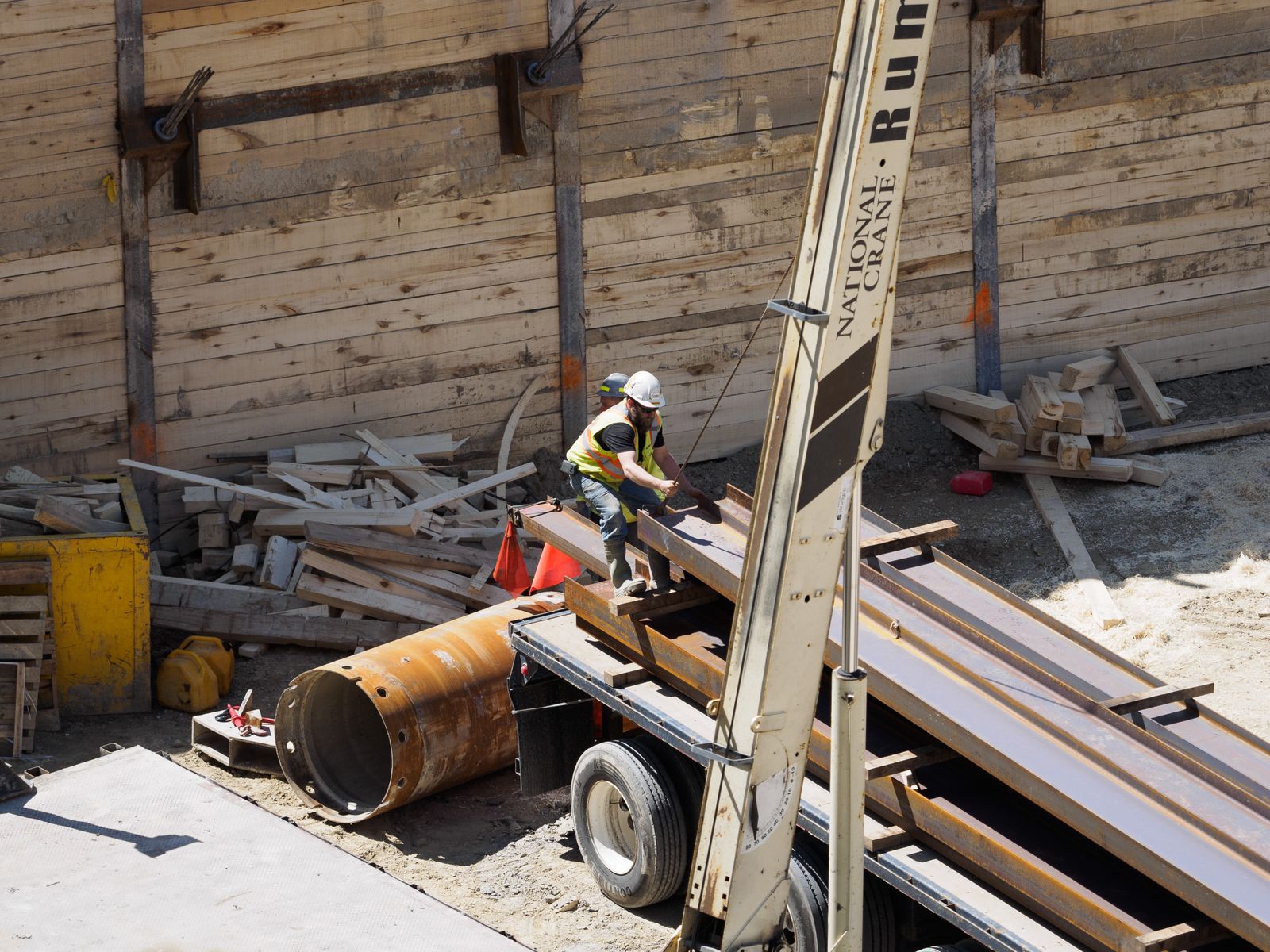
Federal OSHA requires a qualified rigger when workers hook, unhook or guide a load inside the fall zone, and when rigging is used for crane assembly or disassembly. A qualified rigger does not need a certification card under federal rules, only the ability to show they meet the qualified-person definition. Signal persons are different: they must pass an oral or written test and a practical test, and their documentation must list each type of signaling they are qualified for and be available at the site.
When you need a qualified rigger
Two places in Subpart CC call for one:
- Working in the fall zone. Under 1926.1425(c), when employees are hooking, unhooking or guiding a load, or making the initial connection to a structure, inside the fall zone, the materials must be rigged to prevent unintentional displacement, hooks must have self-closing latches or the equivalent, and "the materials must be rigged by a qualified rigger."
- Assembly and disassembly. Under 1926.1404(r)(1), "when rigging is used for assembly/disassembly, the employer must ensure that ... the rigging work is done by a qualified rigger."
Hooking up a load in the fall zone is most picks on most jobs. In practice, every crane job needs at least one qualified rigger on the hook.
What "qualified rigger" means
1926.1401: "Qualified rigger is a rigger who meets the criteria for a qualified person." And a qualified person is someone who, by a recognized degree, certificate or professional standing, or by extensive knowledge, training and experience, has shown they can solve problems relating to the work.
So under federal rules:
- A rigging certification is one way to meet the definition, not the only way.
- Experience and training can be enough if the employer can show it.
- There is no federal expiry on rigger qualification.
That is the legal floor. The commercial floor is higher: many GCs and owners ask for a rigger card or a written employer qualification on the jobsite crane packet. The NIH crane checklist, for example, asks for "Rigger Certs" and "Signal Person Certs" along with operator cards.
Washington: riggers need documented tests
Washington goes further. WAC 296-155-53306 requires a qualified rigger "whenever employees are engaged in hooking, unhooking, guiding the load, or the connection of a load," and the rigger must show qualification through a third-party evaluator or the employer's own qualified evaluator, with:
- Knowledge of the relevant ASME B30 volumes, sling and hitch types, rigging hardware, load weight estimation, center of gravity and angle effects
- A written test and a practical test, all documented
- Documentation available at the site that "must specify each type of rigging" the rigger is qualified for
- Renewal at least every five years with at least a documented written exam
Not every worker on the hook has to be a fully qualified rigger in Washington; the rule requires at least one, with others qualified by training or experience for their tasks. See Washington's crane rules.
Signal persons: always tested, always documented
A signal person is required in situations set out in 1926.1419, such as when the point of operation is not in full view of the operator. Whenever one is used, 1926.1428 applies.
Two ways to qualify:
| Option | Who evaluates | Portable to other employers? |
|---|---|---|
| Option 1 | Third-party qualified evaluator | Yes, the documentation travels with the person |
| Option 2 | The employer's own qualified evaluator | No, "other employers are not permitted to use it" |
What they must know and show (1926.1428(c)):
- The type of signals used, and the Standard Method for hand signals if hand signals are used
- Competence in applying those signals
- A basic understanding of crane operation and limits, including swinging and stopping loads and boom deflection
- The relevant requirements of 1926.1419 through 1926.1422 and 1926.1428
- Proof through "an oral or written test, and through a practical test"
What the paperwork must say (1926.1428(a)(3)):
- It "must specify each type of signaling (e.g. hand signals, radio signals, etc.)" the person is qualified for
- It must be "available at the site while the signal person is employed by the employer"
If someone's actions show they do not meet the requirements, they stop signaling until retrained and reassessed (1926.1428(b)).
OSHA's compliance directive tells inspectors to verify the signal person's "qualifications/documentation," notes that "acceptable documents include both physical and electronic records," and to check that the communication system in use matches what the signal person is qualified for. A radio-only qualification on a hand-signal job is a finding.
Washington's signal person rule (WAC 296-155-53302) adds documented tests and a five-year renewal, like its rigger rule.
Qualified vs certified: the short version
| Qualified (federal) | Certified | |
|---|---|---|
| Rigger | Required where 1425(c) or 1404(r) apply; meets the qualified-person definition | Optional federally; common customer ask |
| Signal person | Required whenever a signal person is used; tested and documented | A third-party evaluator's documentation is one of the two options |
| Expiry | None federally | Set by the issuer; Washington caps at five years |
Who brings the rigger and signal person
On an operated rental, sometimes the crane company supplies them, sometimes the customer does. Get it in writing on the ticket or the agreement. Dimeo's lift plan form, for example, puts rigger and signal person designations and training certificates on the subcontractor hiring the crane, not on the crane company. Whoever employs them owns the paperwork. See bare rental vs operated rental paperwork.
Common gaps at the gate
- The signal person's card says hand signals, and the job runs on radios
- A rigger "qualified by experience" with nothing on paper to show it
- The employer-evaluated signal person changed companies, and the new employer is relying on the old employer's assessment, which is not portable
- Nobody on the hook crew is designated as the qualified rigger for a pick in the fall zone
- In Washington, a rigger or signal qualification older than five years
Each of these is quick to fix before the job and slow to fix at the gate.
A simple file for riggers and signal persons
For each person:
- Name and employer
- Which option was used (third party or employer evaluator) and who the evaluator was
- For signal persons, each signaling type: hand, radio, other
- Test dates and results, written or oral and practical
- Expiry or renewal date, if your state or customer sets one
- A copy that can be shown at the site
For operator paperwork, see crane operator qualification vs certification.
Where CraneFile fits
We're building CraneFile with a handful of crane shops. Rigger and signal person qualifications sit in each person's file next to their other cards, with the signaling types listed, and go out in the GC packet when that person is on the job. It is not live yet. If you want in early, reserve a spot or call Patrick at (786) 471-4419.
This is plain-English guidance, not legal advice. The regulation text governs, and state rules or your contract may require more.
Questions we get
Does OSHA require riggers to be certified?
No. Federal rules require a qualified rigger in certain situations, and a qualified rigger is simply a rigger who meets the definition of a qualified person in 1926.1401. Certification is one way to show it, and many GCs ask for a card, but the federal rule does not require one. Washington adds documented written and practical tests.
When is a qualified rigger required?
Under 1926.1425(c)(3), when workers are hooking, unhooking or guiding a load, or making the initial connection, inside the fall zone. Under 1926.1404(r)(1), when rigging is used for crane assembly or disassembly.
How does a signal person get qualified?
Either through documentation from a third-party qualified evaluator (portable) or through an assessment by the employer's own qualified evaluator (not portable). Either way the person must pass an oral or written test and a practical test (1926.1428).
What must signal person documentation say?
It must specify each type of signaling the person is qualified for, such as hand signals or radio signals, and it must be available at the site while the signal person works for that employer.
Tired of chasing this paperwork?
We're building CraneFile with a handful of crane shops: every crane's and operator's papers kept current, and one link for the GC. Want in early? Reserve a founding spot or call Patrick at (786) 471-4419.
This is plain-English guidance, not legal advice. The regulation text and your state's rules govern.
Keep reading

The 1926.1427(f) Crane Operator Evaluation: What to Document
How to run and document the employer crane operator evaluation under 1926.1427(f): who evaluates, what configuration means, required fields, a sample form.
Crane Operator Qualification vs Certification: 1926.1427
Under 1926.1427 an operator needs training, a certification or license, and a documented employer evaluation. What each one is, who issues it, and what to keep.