OSHA Crane Inspection Schedule: Shift, Monthly, Annual
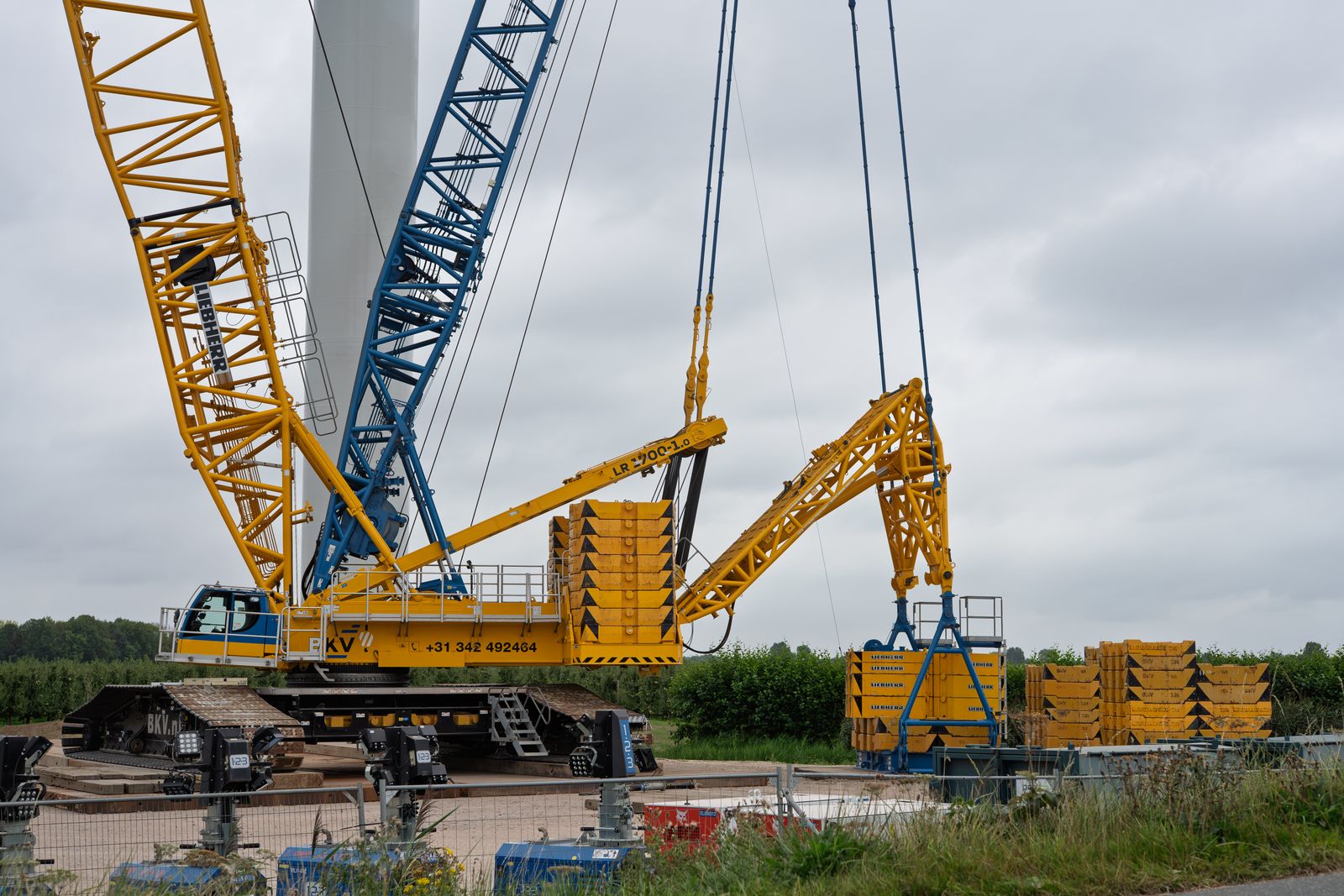
A crane used in construction gets inspected on three regular clocks under 29 CFR 1926.1412: every shift by a competent person, every month it is in service, and at least every 12 months by a qualified person. Federally, only the monthly and annual inspections have to be written down, and you keep them for three months and 12 months. On top of the regular clock, assembly, repairs, modifications, severe service and idle time each trigger their own inspection.
The schedule at a glance
| Inspection | Who does it | Federal rule | Written record? | Keep it |
|---|---|---|---|---|
| Every shift | Competent person | 1926.1412(d) | Not required federally | n/a |
| Monthly | Competent person | 1926.1412(e) | Yes | 3 months minimum |
| Annual / comprehensive | Qualified person | 1926.1412(f) | Yes | 12 months minimum |
| After assembly | Qualified person | 1926.1412(c) | Not specified | n/a |
| After repair or adjustment | Qualified person | 1926.1412(b) | Not specified | n/a |
| After modification | Qualified person | 1926.1412(a) | Not specified | n/a |
| Severe service | Qualified person | 1926.1412(g) | Not specified | n/a |
| Idle 3 months or more | Qualified person | 1926.1412(h) | Monthly-style record | 3 months |
Wire rope rides along on the same clock. Section 1926.1413 adds a shift check, a monthly check documented the same way as the monthly crane inspection, and an annual check of the full rope length documented the same way as the annual.
Competent person vs qualified person
These two words decide who signs what.
- Competent person (1926.1401): someone who can spot existing and predictable hazards and has the authority to fix them on the spot. In most small shops that is the operator or the lead hand.
- Qualified person (1926.1401): someone who, by degree, certificate, professional standing, or extensive knowledge, training and experience, has shown they can solve problems with the work. For the annual, that is usually a third-party crane inspector, though federal rules do not require a third party.
If your mechanic does annuals in-house, be ready to show why they meet the qualified-person definition. A GC's safety manager will ask, and so will a compliance officer. OSHA's directive tells inspectors to "identify who did the inspection and verify that inspector's qualifications."
Every shift: the walkaround
The rule says a competent person "must begin a visual inspection prior to each shift the equipment will be used, which must be completed before or during that shift." No booming down, no taking things apart unless what you see calls for it.
The minimum list in 1926.1412(d)(1) has 14 items:
- Control mechanisms for maladjustment
- Control and drive mechanisms for wear and contamination
- Air, hydraulic and pressurized lines for leaks
- Hydraulic fluid level
- Hooks and latches
- Wire rope reeving
- Wire rope, per 1926.1413
- Electrical apparatus
- Tires, when in use
- Ground conditions, including settling under outriggers
- Level, before each shift and after each move and setup
- Cab windows
- Rails, for rail-traveling equipment
- Safety devices and operational aids
If the competent person finds a deficiency, they decide right then whether it is a safety hazard. If it is, the crane is out of service until it is fixed.
Paperwork: none required federally. OSHA's compliance directive, CPL 02-01-063, says it plainly: "Since Subpart CC does not require documentation of shift inspections," the compliance officer asks the operator how it was done. That is the federal floor. Washington requires shift inspection records kept three months, and plenty of GCs want today's sheet in the cab. See Washington's crane rules.
Monthly: same list, now on paper
Each month the crane is in service, it gets the shift inspection again, plus any item the last annual flagged "monitor." The crane cannot be used until the monthly shows no corrective action is needed.
The record must show, per 1926.1412(e)(3):
- The items checked and the results
- The name and signature of the person who did it
- The date
It is kept for a minimum of three months by "the employer that conducts the inspection." That last phrase matters on rentals, because it ties the record to whoever did the inspection. More on that in bare rental vs operated rental paperwork. For a field-by-field look at a good monthly sheet, read monthly crane inspection documentation.
Annual: the deep one
At least every 12 months, a qualified person inspects the crane. It covers the shift items plus a 21-item list in 1926.1412(f)(2), with disassembly "as necessary." The list runs from structure, sheaves, drums and pins through brakes, power plant, valves, cylinders, outrigger pads, wiring, decals, the operator seat and handrails. It must include functional testing.
For each deficiency, the qualified person decides one of three things:
- Safety hazard: the crane is out of service until it is corrected.
- Not a hazard yet, but monitor it: the item gets checked at every monthly until it is resolved.
- Acceptable.
The record holds the same two elements as the monthly (items and results, name, signature and date) and is retained at least 12 months. The details, including what most GCs expect beyond the rule, are in annual crane inspection requirements.
The event-driven inspections
These do not run on a calendar. Something happens, and the crane needs a qualified person's look before it works again.
- Modified equipment (1926.1412(a)): after modifications that affect safe operation, before first use, with functional testing.
- Repaired or adjusted equipment (1926.1412(b)): after a repair tied to safe operation, such as a safety device, brakes or load-bearing structure.
- Post-assembly (1926.1412(c)): after assembly, to confirm the configuration matches the manufacturer's criteria.
- Severe service (1926.1412(g)): after a possible overload, shock load or long corrosive exposure. You stop using the crane first.
- Idle 3 months or more (1926.1412(h)): a monthly-type inspection by a qualified person before it goes back to work.
One more line people miss: 1926.1412(j) says any part of the manufacturer's inspection procedure that is more thorough or more frequent than OSHA's must be followed. Your OEM manual is part of the schedule.
Frequent vs periodic: the other vocabulary
If you work plants and refineries, you will hear "frequent" and "periodic" inspections. Those words come from the general industry rules, not Subpart CC. Under 29 CFR 1910.180 (crawler, locomotive and truck cranes in general industry), frequent inspections run daily to monthly and periodic inspections run at 1 to 12 month intervals, with monthly certification records on critical items such as brakes, hooks and ropes.
So the same truck crane can fall under Subpart CC on a construction job and under 1910.180 when it sets a unit on a plant roof for maintenance. Ask what the work is before you decide which schedule applies.
What to have ready when someone asks
A GC, an owner's safety rep or a compliance officer will usually ask for some version of this:
- The current annual, with the full report, not just a cover sheet
- The last three monthlies
- Today's shift inspection, if the site or the state requires it
- Any open "monitor" items and how they were checked
- Repair or modification records since the last annual
That list overlaps heavily with the jobsite crane packet, and for retention questions see how long to keep crane inspection records.
Where CraneFile fits
We're building CraneFile with a handful of crane shops. The idea is simple: each crane keeps its own file of shift sheets, monthlies, the annual and any monitor items, it warns you before the annual runs out, and it sends the whole file to a GC as one link. It is not live yet. If you want in early, reserve a spot or call Patrick at (786) 471-4419.
This is plain-English guidance, not legal advice. The regulation text governs, and state rules can be stricter.
Questions we get
How often does OSHA require a crane to be inspected?
Under 29 CFR 1926.1412, a construction crane gets a visual inspection by a competent person every shift it is used, a monthly inspection each month it is in service, and an annual/comprehensive inspection by a qualified person at least every 12 months. Extra inspections are triggered by assembly, repair, modification, severe service and idle time of 3 months or more.
Does the daily crane inspection have to be written down?
Not under federal Subpart CC. OSHA's own compliance directive says Subpart CC does not require documentation of shift inspections. Some states, such as Washington, do require written shift inspections, and many GCs ask for them anyway.
How long do I keep monthly and annual crane inspection records?
Federally, monthly inspection documents are kept at least three months (1926.1412(e)(3)) and annual/comprehensive documents at least 12 months (1926.1412(f)(7)). California requires annual certification records to be kept 48 months.
Who can do the annual crane inspection?
Federal rules require a qualified person, as defined in 1926.1401. That can be your own mechanic if they meet the definition. California and Washington require a state-licensed or accredited certifier instead.
Tired of chasing this paperwork?
We're building CraneFile with a handful of crane shops: every crane's and operator's papers kept current, and one link for the GC. Want in early? Reserve a founding spot or call Patrick at (786) 471-4419.
This is plain-English guidance, not legal advice. The regulation text and your state's rules govern.
Keep reading

Monthly Crane Inspection: What to Document (1926.1412(e))
What OSHA's monthly crane inspection covers, the three things the record must show, who signs it, how long to keep it, and a checklist you can copy.

Green Sticker Crane Inspections: What the CraneSafe Sticker Means
What Green Sticker by CraneSafe is, who runs it, how a GC checks a sticker, and how it fits with OSHA's annual inspection and California and Washington rules.
Annual Crane Inspection Requirements: What OSHA Says
The OSHA annual crane inspection under 1926.1412(f): who can do it, the 21 items, functional testing, what the record must show, and how long to keep it.